Key takeaways
- Buy a handheld console if you want to play comfortably on the couch, in bed or on a train.
Buy a handheld console if you want to play comfortably on the couch, in bed or on a train, and buy a gaming laptop if you want one machine that also handles work, creative software and the widest range of PC games. The two overlap less than the marketing suggests, and the right choice depends on where you play, what you play and how many jobs one device has to do.
This guide is for buyers who have narrowed their search to these two categories and cannot decide. It compares them on the factors that actually change daily use: portability, game library, performance headroom, battery life, heat and noise, and long-term flexibility. It stays qualitative on purpose, since specs and availability shift from season to season, and a sound decision in 2026 starts with habits rather than model numbers.
The Core Difference
A handheld is built around the idea that the screen, controls and battery are one object you can hold. It is meant to be picked up for twenty minutes or two hours, then slipped into a bag. A gaming laptop is a small desktop in a clamshell: it expects a flat surface, a keyboard and mouse, and often a power outlet. Both can play games away from a desk, but they ask different things of you.
Think of the handheld as a console you carry and the laptop as a computer you game on. That distinction explains most of the trade-offs below, from how long the battery lasts to whether you can edit a video on the same device.
Where Each One Wins
Portability and Comfort
Handhelds are lighter and can be used one-handed in a way a laptop never can. You can play on a sofa, in a waiting room or lying down without a table. A gaming laptop needs a surface, a hinge angle and usually a mouse, and it is heavier to carry daily. If your play happens in spare moments away from a desk, the handheld fits more naturally.
Game Library and Access
Handheld libraries depend on the platform: some run a console ecosystem with curated titles, while PC handhelds can launch a large range of PC stores. A laptop opens the full PC catalog, including mods, emulation-friendly setups, competitive titles and games that expect a keyboard and mouse. If your favorites are strategy, simulation or esports titles, a laptop is the more natural home.
Performance and Visual Quality
A laptop with a dedicated graphics chip generally has more headroom than a handheld, which means higher settings, higher frame rates and the ability to drive an external monitor. Handhelds trade peak power for size, so expect lower settings in demanding titles, which is often fine on a small screen. Decide whether you value polish or portability more.
Battery, Heat and Noise
Both categories shorten battery life as they work harder. Handhelds are designed for unplugged play, but demanding games drain them quickly, and gaming laptops often expect to be plugged in for full performance. Fans on a laptop can be loud under load, while handheld fans are smaller and can be heard close to your hands.
Comparison at a Glance
| Factor | Handheld console | Gaming laptop |
|---|---|---|
| Carry weight | Light, bag-friendly | Heavier, needs a larger bag |
| Play position | Anywhere, one-handed possible | Needs a surface |
| Performance headroom | Moderate | Higher |
| Library | Platform-dependent | Full PC catalog |
| Extra uses | Limited | Work, creative tools, streaming |
| Battery behavior | Built for unplugged play | Best when plugged in |
| Upgrade path | Limited | Limited, but more storage and RAM options |
| Docking to a TV or monitor | Often supported | Supported through ports |
Before You Buy Checklist
- Write down where you will play most: sofa, desk, travel or all three.
- List the five games you most want to play and check what each platform supports.
- Decide whether the device must also handle work, school or creative software.
- Check whether you already own a desktop or monitor you could pair with it.
- Look at storage options, because modern games are large and storage runs out quickly.
- Think about noise tolerance in a shared room or a bedroom.
Who Should Choose What
Choose a Handheld If
You already own a capable desktop or console, you want gaming in the gaps of your day, or you travel often and want a device that starts quickly and sleeps just as quickly. It also suits households that share a television, since you can play on your own screen without taking over the living room.
Choose a Gaming Laptop If
You want a single device for work and play, you enjoy mouse-and-keyboard games or you want the choice of upgrading storage and plugging into a monitor, keyboard and headset at a desk. It is also the stronger option when your games demand more power than a handheld can supply.
Consider Both If
You play on a desktop at home and want a lightweight companion for trips, or your budget does not stretch to a laptop with a strong graphics chip. Many players end up with a handheld for relaxed play and a more powerful machine for the games they care about most.
Cost Over Time, Not Just on the Day You Buy
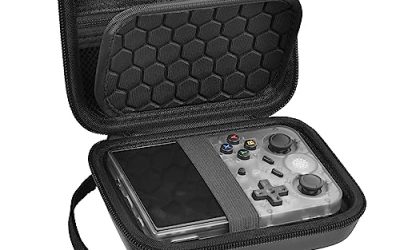
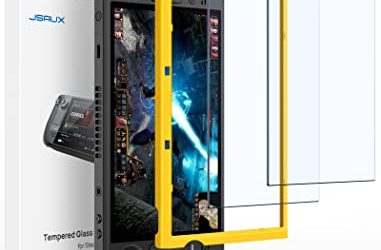
Look past the sticker and think about what you will add later. A handheld often needs extra storage, a case, a screen protector and perhaps a dock, and those pieces add up over the first year. A gaming laptop may need a cooling pad, a mouse, a headset and a bag, and its hardware ages more quickly if you want the newest games at high settings.
The question is not which category is cheaper in general, since both ranges run from modest to expensive. It is which one replaces more of what you would otherwise buy. If a laptop would take the place of a work computer, its higher cost is shared across jobs. If a handheld would sit beside a desktop you already own, the cost is for convenience alone, and that may be a fair trade or an indulgence depending on how often you travel.
Screen, Controls and Comfort in Daily Use
Screen size and control style shape how long you can play comfortably. A handheld screen is small enough to hold at arm’s length but can feel cramped for text-heavy strategy games or for anything that relies on a cursor. Built-in controls feel natural for action and platform games, and they are always with the device.
A laptop screen is larger and easier on the eyes for long sessions, and a keyboard and mouse suit shooters, strategy and simulation. The cost of that comfort is posture and space: you need a desk or a lap tray, and a laptop on your knees gets warm. If you plan marathon sessions, consider whether you would rather sit at a desk or sprawl on a sofa.
Common Mistakes
- Buying a laptop for portability and then leaving it plugged in at a desk all year.
- Buying a handheld and expecting it to run every demanding PC title on high settings.
- Ignoring storage size and discovering that a few big games fill the drive.
- Overlooking accessories such as a dock, a controller or a carry case that the device needs to be practical.
- Choosing on specs alone without thinking about where and how you actually play.
Related guides
- Hall Effect Vs Potentiometer Controller Sticks Explained
- Low Profile Cpu Coolers For Small Form Factor Pcs
- How To Transfer Nintendo Switch Data To A New Console
Frequently Asked Questions
Can a handheld replace a gaming laptop?
For play alone, often yes, if your games suit the screen and controls. It cannot replace a laptop for work, creative tasks or heavier PC titles.
Is a gaming laptop worth it just for portability?
Only if you value the extra performance and the flexibility. For purely casual travel gaming, a handheld is lighter and easier to use in a cramped seat.
Which one is better for a small apartment?
A handheld takes less space and makes less noise, so it tends to fit small rooms better. A laptop adds the option of a desk setup without a tower.
Will either hold its value over time?
Both lose value as newer models arrive, so buy based on how much you will use it now rather than on resale hopes.
FAQ
Can a handheld replace a gaming laptop?
Is a gaming laptop worth it just for portability?
Which one is better for a small apartment?
Will either hold its value over time?
More from Amazon
Programs that pair well with the guide above. Offers and eligibility are set by Amazon and may change.
Free shipping on eligible items, Prime Video and more. Eligible new members can start with a free trial.
Start a Prime free trialAd-free music streaming. Eligible new subscribers can start with a free trial.
Try Music Unlimited freeA Prime membership for ages 18-24 with a trial period. Eligibility is set by Amazon.
See Prime for Young AdultsAudiobooks and podcasts to listen to on the go. Eligible new members can start with a free trial.
Try Audible freeAs an Amazon Associate we earn from qualifying purchases.