Our Top Picks
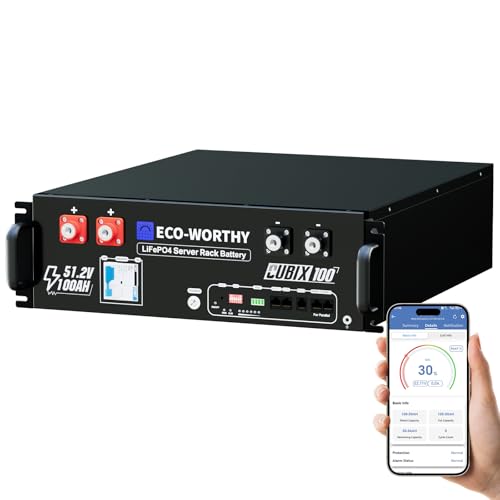 ECO-WORTHY Cubix100 48V 100Ah LiFePO4 Lithium UL9540 Server51.2V100AH22.09 x 19.02 x 5.63 inches103 PoundsCheck on Amazon
 SOARAISE Solar Power Bank 48000mAh Wireless Portable Charger6.38 x 3.43 x 1.57 InchesCheck on Amazon
Searching for batteries for solar power storage sounds like one problem, but it is really three. Some buyers want a rack-mounted lithium bank that sits behind a home inverter and rides through an evening of cooking, laundry, and lighting. Others want a suitcase-sized power station that pairs with a small folding panel for a campsite or a blackout shelf. A third group only needs a pocket-sized solar power bank that keeps a phone alive on a trail. The right pick depends on how many watt-hours you need to hold, how fast you need to draw them down, and whether the pack has to live permanently on a wall or travel in a trunk.
This guide sorts seven listed options across that range, from a 5120Wh server rack battery down to a 20000mAh phone charger with a solar strip. Everything below is judged from the specs in the product titles, so treat it as a shortlist for comparing capacity, chemistry, and certifications rather than a performance report. As of 2026, LiFePO4 chemistry and safety listings have become the main filters shoppers use, and both come up repeatedly in the picks below.
Quick Picks

Jackery Explorer 300 Portable Power Station,292Wh | Backup LiFePO4 Battery, Solar Generator for Outdoors, Camping, Travel, Hunting, Blackout (Solar Panel Optional)
One of the consumer electronics options compared in this guide.
View on AmazonECO-WORTHY Cubix100 48V 100Ah LiFePO4 Lithium UL9540 Server Rack Battery | UL9540A & UL1973 & CEC Listed, Support Bluetooth & WiFi,5120Wh Energy Storage System for Emergency,Home Backup Power,Off-Grid
One of the consumer electronics options compared in this guide.
View on Amazon
200W Solar Powered Generator, Portable Power Station with Solar Panel 40W | Powkey 146Wh Power Bank with 120V AC Outlet, Pure Sine Wave Lithium Battery for Outdoor Camping Emergency Home
One of the consumer electronics options compared in this guide.
View on AmazonSOARAISE Solar Power Bank 48000mAh Wireless Portable Charger with 4 Cables | Solar Charger with 4 Solar Panels, 48000mAh High Capacity, PD QC 3.0 Fast Charging Battery Pack, Flashlights for Camping
One of the consumer electronics options compared in this guide.
View on Amazon
Solar Power & Battery Storage Systems 2026–2027: A Practical Homeowner’s Guide to Panels, Inverters, LiFePO4, Off-Grid Setup, Backup Electricity, Sizing, Installation, and Energy Savings
One of the consumer electronics options compared in this guide.
View on Amazon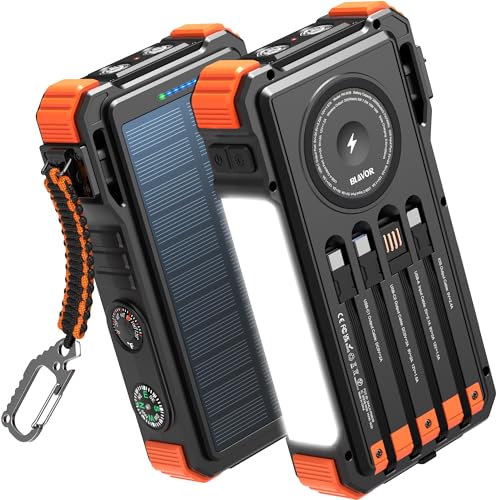
BLAVOR Solar Power Bank 20000mAh, Wireless Charger for Phones & Apple Watch | Portable battery pack, 4 built-in cables, 20W USB-C fast charging, IPX5 waterproof, camping flashlight, outdoor emergencies
One of the consumer electronics options compared in this guide.
View on Amazon| Product | Best for | Key spec from the title |
|---|---|---|
| Jackery Explorer 300 | Blackout shelf and camping | 292Wh LiFePO4 battery |
| ECO-WORTHY Cubix100 | Whole-home backup and storage | 48V 100Ah, 5120Wh, UL9540A and UL1973 listed |
| 300W solar generator with 60W panel | Bundled starter kit | 280Wh, pure sine wave, USB QC3.0 |
| 40W-panel power station (100W) | Light-duty camping | 146Wh battery pack with AC outlet |
| Powkey 200W solar generator | Small gadgets and CPAP-class loads on a budget | 146Wh, 120V AC outlet, pure sine wave |
| SOARAISE 48000mAh | Multi-phone trail charging | 48000mAh, PD and QC 3.0, four solar panels |
| BLAVOR 20000mAh | Pocket-sized emergency top-ups | 20000mAh, 20W USB-C, IPX5 |
How to Choose
Start with watt-hours, not milliamp-hours
Capacity in Wh is the number that lets you compare a rack battery with a power station. Divide it by the wattage of what you plan to run: a 292Wh unit feeding a 60W device lasts roughly four hours before conversion losses, while a 5120Wh bank can carry a 500W load for around ten. Power-bank figures such as 20000mAh are specified at the cell voltage, so convert them (multiply by 3.7 and divide by 1000) before comparing. A 20000mAh bank holds roughly 74Wh, which is a phone charger, not a household battery.
Chemistry and safety listings
Look for LiFePO4 when you want long cycle life and stable thermal behavior, and look for UL9540A, UL1973, or CEC listings when the battery is going into a house. Those marks matter for inspectors, insurers, and utility interconnection. Ignore vague phrases like “military grade” or “high density” that carry no standard behind them. Budget packs often skip the certification and only mention a lithium type, which is fine for a camper but a problem for a permanent install.
Output ports and waveform
Check whether the unit has a real AC outlet and whether it says pure sine wave. Laptops, small fans, and medical-adjacent devices run better on pure sine output. Count USB-C ports and read the wattage; 20W USB-C is enough to top up a phone, while PD and QC 3.0 support suggests faster charging for tablets. Rack batteries usually have no outlets at all and rely on a separate inverter, so budget for that piece.
Solar input and what the panel really does
A bundled 40W or 60W panel will take many hours of strong sun to refill a 146Wh or 280Wh pack, so treat the panel as a trickle source. Tiny panels built into a power bank are for slowing the drain, not for recharging fast. For a home bank, size your array to the battery: a 5kWh pack wants hundreds of watts of panels and a charge controller or hybrid inverter that speaks its communication protocol. Where budget models cut corners is usually the panel size, the cycle-life claim, and the lack of a battery management display.
One more habit worth building: write down the single heaviest device you expect to run, then confirm both the continuous wattage of the unit and its surge allowance. Motors in pumps, fans, and small refrigerators pull several times their running wattage for a moment at startup, and a station with a modest inverter will simply shut off. Capacity answers how long; the inverter rating answers whether it starts at all.
The 7 Best Options
Jackery Explorer 300
This is the compact name-brand pick for anyone building a first backup kit. The title lists 292Wh of LiFePO4 capacity and positions it for outdoors, travel, hunting, and blackouts, so it suits a household that wants to keep phones, a router, and a lamp running through a short outage.
- LiFePO4 chemistry is called out in the title, which points to a longer cycle life than basic lithium packs.
- Marketed as a solar generator, so it fits a single-panel camp or porch setup.
- Trade-off: 292Wh will not run a refrigerator or space heater, so it is a short-duration backup only.
Skip it if you need to power a whole home or run large appliances.
ECO-WORTHY Cubix100
The only true home-storage battery in the lineup. The title lists a 48V 100Ah LiFePO4 server rack battery with 5120Wh of capacity, UL9540A, UL1973, and CEC listings, plus Bluetooth and WiFi support for monitoring.
- Safety listings in the title are what installers and inspectors usually ask for.
- 5120Wh is enough to anchor a serious backup or time-shifting system.
- Trade-off: it is a rack component, so you need a compatible inverter, wiring, and a proper mounting plan.
Skip it if you want a plug-and-play unit for camping or a rental apartment.
300W Solar Generator with 60W Panel
A bundle for buyers who want panel and battery in one box. The title shows a 300W station with a 60W solar panel, 280Wh, pure sine wave output, and USB QC3.0 alongside DC and AC ports.
- The panel is included, so there is no guesswork about compatible connectors.
- Pure sine wave output is listed, which helps with sensitive electronics.
- Trade-off: a 60W panel will refill 280Wh slowly, so plan on a full day or more of good sun.
Skip it if you want a recognized brand label or a rack-grade home battery.
40W-Panel Power Station (100W)
This is the small, light-duty option. The title describes a 146Wh DC battery pack with an AC outlet, a 100W rating, and a 40W solar panel aimed at camping and phone charging.
- 146Wh is easy to carry and enough for phones, lights, and a small fan.
- Bundled panel and AC outlet make it a complete mini kit.
- Trade-off: the 100W ceiling rules out most kitchen and workshop gear.
Skip it if you need to run anything larger than a laptop or small gadgets.
Powkey 200W Solar Generator
Similar in capacity to the previous model but with a 200W rating. The title shows 146Wh, a 40W panel, a 120V AC outlet, pure sine wave output, and a lithium battery, which makes it a slightly stronger option for short bursts of higher draw.
- The 200W rating gives more headroom than a 100W station of the same capacity.
- Pure sine wave and a 120V outlet suit small appliances and chargers.
- Trade-off: 146Wh drains quickly under a heavy load, so runtime is short.
Skip it if you need an overnight run time for anything above a light load.
SOARAISE 48000mAh Solar Power Bank
This one belongs in the hiking pack, not the garage. The title lists 48000mAh, wireless charging, four built-in cables, four solar panels, and PD and QC 3.0 fast charging.
- 48000mAh is a large reserve for a power bank and can refill several phones.
- Four included cables cut down on what you need to carry.
- Trade-off: it is a charger for small devices, not a storage battery for a home system.
Skip it if you want to power AC appliances or tie it into a solar array.
BLAVOR 20000mAh Solar Power Bank
The lightest pick here. The title lists 20000mAh, wireless charging for phones and Apple Watch, four built-in cables, 20W USB-C fast charging, and an IPX5 rating.
- 20W USB-C is a sensible output for modern phones.
- IPX5 water resistance adds peace of mind outdoors.
- Trade-off: the capacity is small next to a power station, and a built-in solar strip will recover charge slowly.
Skip it if you need AC power or capacity for multiple days off the grid.
Note: one listing in the brief is a printed homeowner guide rather than a battery, so it is left out of the picks above.
Which One Fits Your Situation
You want to ride out a short outage with basics
The Jackery Explorer 300 fits this case. Its 292Wh LiFePO4 battery covers phones, a router, and lights for an evening, and it stores easily in a closet.
You are building a real home storage system
The ECO-WORTHY Cubix100 is the only listing here with 5120Wh and the UL9540A and UL1973 listings. Pair it with a compatible inverter and an array sized to match.
You want a bundled kit for a weekend campsite
The 300W solar generator with the 60W panel is the stronger choice if you want a larger battery and panel together. The Powkey 200W is the lighter alternative when you only need to charge small gear and run a couple of low-draw devices.
You hike and only need phone power
The SOARAISE 48000mAh covers a group of phones over several days, while the BLAVOR 20000mAh is the pick if you want something slimmer with wireless charging and IPX5 resistance.
If you are still undecided, the simplest split is by purpose: buy certified rack storage for a house, a mid-sized station for a vehicle or cabin, and a power bank for a pocket. Mixing those roles is where most disappointment comes from, because a phone-class pack cannot stand in for a home battery and a rack bank cannot go on a hike.
Common Mistakes
- Comparing milliamp-hours to watt-hours without converting, which makes a power bank look far bigger than it is.
- Buying a small panel and expecting it to refill a battery in a few hours.
- Skipping safety listings on a battery that will be installed inside a house.
- Forgetting that rack batteries need a separate inverter and a charge controller or hybrid unit.
- Choosing a station by its wattage rating alone and ignoring the watt-hours that set how long it will run.
Related guides
- How To Fix Stick Drift On Xbox And Ps5 Controllers
- Mirrorless Cameras For Landscape Photography
- How Long Does A Gaming Laptop Last Before Upgrade
Frequently Asked Questions
How many watt-hours do I need for home backup?
Add up the devices you must keep running and multiply each wattage by the hours you expect an outage to last. A router, lights, and phones can fit in a few hundred watt-hours, while a refrigerator calls for a rack-class bank in the multiple-kilowatt-hour range.
Is LiFePO4 worth looking for?
Buyers commonly look for it because it is associated with longer cycle life and stable thermal behavior. The title of the Jackery and the ECO-WORTHY both mention it, which makes comparison easier.
Can a small solar power bank charge from its own panel?
Built-in panels mainly slow the drain of the battery rather than refill it quickly. For a real recharge, use a wall adapter or a larger external panel.
Do I need a certified battery for a home install?
Local codes vary, but inspectors and insurers often ask for UL9540A and UL1973 listings on stationary storage. Check with your installer before buying an uncertified pack for permanent use.