Key takeaways
- Best Overall: DJI Mic 3, the most complete wireless kit for creators.
- Best Premium: RØDE Wireless PRO, with timecode and two Lavalier II mics included.
- Best Value: DJI Mic Mini, ultralight 10 g transmitters and a charging case for a budget-to-mid price.
- Best for Camera and PC: Hollyland Lark M2, button-sized mics with long battery life.
- Best Budget Wireless: BOYA mini 2, AI noise reduction for an entry-level price.
- Best Wired for Transmitters: RØDE Lavalier II, a discreet flat capsule with a locking connector.
- Best Wired for PC and Phone: Sennheiser XS Lav USB-C, plug-in simplicity for streaming and calls.
Short answer: the best lavalier microphone for most creators in 2026 is the DJI Mic 3. Its tiny 16 g transmitters, 32-bit float backup recording, dual-band wireless link and charging case cover vlogging, streaming, interviews and podcasts in one kit. The runner-up is the RØDE Wireless PRO, which adds built-in timecode and ships with two wired Lavalier II mics, making it the stronger choice for multi-camera shoots. Below are seven main picks spanning budget clip-on mics to pro wireless systems, three more options, a plain-English explanation of what a lavalier microphone is, and a buying guide built around real numbers.
Disclosure: this page contains affiliate product cards, and we may earn a commission if you buy through them at no extra cost to you. Our picks are based on maker spec sheets and independent reviews, not lab work of our own.
What Is a Lavalier Microphone?
A lavalier microphone, often called a lav or lapel mic, is a small microphone that clips to your clothing a few inches below your chin. Because it sits so close to your mouth, it captures your voice clearly while picking up less room echo and background noise than a camera mic or a webcam mic. Most lavs use an omnidirectional capsule, so your voice stays consistent even when you turn your head.
There are two broad types. A wired lavalier plugs into a phone, computer, recorder or wireless transmitter through a cable. A wireless lavalier system uses a small transmitter, often with the microphone built in, that sends audio to a receiver attached to your camera, phone or PC. Wireless kits cost more but free you from cables, which matters for streamers who stand up, fitness creators and interview shooters.
Top Picks at a Glance
- Best Overall: DJI Mic 3, the most complete wireless kit for creators.
- Best Premium: RØDE Wireless PRO, with timecode and two Lavalier II mics included.
- Best Value: DJI Mic Mini, ultralight 10 g transmitters and a charging case for a budget-to-mid price.
- Best for Camera and PC: Hollyland Lark M2, button-sized mics with long battery life.
- Best Budget Wireless: BOYA mini 2, AI noise reduction for an entry-level price.
- Best Wired for Transmitters: RØDE Lavalier II, a discreet flat capsule with a locking connector.
- Best Wired for PC and Phone: Sennheiser XS Lav USB-C, plug-in simplicity for streaming and calls.
Comparison Table: Best Lavalier Microphones
| Microphone | Type | Best For | Range | Battery | Internal Recording | Price Tier |
|---|---|---|---|---|---|---|
| DJI Mic 3 | Wireless, 2 TX | All-round creators | Up to 400 m | 8 h TX, up to 28 h with case | 32-bit float, 32 GB | Upper-mid |
| RØDE Wireless PRO | Wireless, 2 TX | Multi-cam, timecode | Up to 260 m | 7 h, case adds charges | 32-bit float, 32 GB per TX | Premium |
| DJI Mic Mini | Wireless, 2 TX | Value, vlogging | Up to 400 m | 11.5 h TX, up to 48 h with case | None | Budget to mid |
| Hollyland Lark M2 | Wireless, 2 TX | Camera and PC | Up to 300 m line of sight | 10 h TX, up to 40 h with case | None | Budget to mid |
| BOYA mini 2 | Wireless, 2 TX | Phones on a budget | Up to 100 m | 6 h TX, up to 30 h with case | None | Budget |
| RØDE Lavalier II | Wired, 3.5 mm TRS | Wireless transmitters | Cable | Plug-in power | Depends on transmitter | Mid-range |
| Sennheiser XS Lav USB-C | Wired, USB-C | PC, phone, tablet | 2 m cable | Bus powered | Records on host device | Budget |
1. DJI Mic 3: Best Lavalier Microphone Overall

DJI Mic 3 (2 TX + 1 RX + Charging Case), Wireless Microphone
Included for 'Best Lavalier Microphone (2026): 7 Wired & Wireless Picks' as a representative home product in this roundup; selection reflects the product set returned for this topic.
View on Amazon- Kit: 2 transmitters, 1 receiver, charging case
- Transmitter weight: 16 g with magnet
- Wireless: Automatic hopping between 2.4 GHz and 5 GHz, up to 400 m range
- Recording: 48 kHz/24-bit transmission, dual-file 32-bit float internal recording on 32 GB
- Battery: About 8 h per transmitter, 10 h receiver, up to 28 h total with case
- Extras: Adaptive gain, two-level noise cancelling, timecode, up to 4 transmitters per receiver
Best for: YouTubers, streamers, interviewers and podcasters who want one kit that does almost everything. Skip if: you need to plug in a separate wired lav, because the Mic 3 has no 3.5 mm mic input.
The Mic 3 is DJI’s most capable wireless lavalier system so far, and it makes the best case for a single do-it-all kit. The transmitters are far smaller than the Mic 2’s, so they disappear on a shirt collar. Dual-band transmission that hops between 2.4 GHz and 5 GHz is designed to hold a stable link in crowded wireless environments like conventions or busy streets, where many 2.4 GHz-only kits struggle.
The feature that sets it apart in daily use is dual-file 32-bit float internal recording. Each transmitter can save both the original track and a processed version to its own 32 GB storage. If a guest suddenly laughs into the mic or the wireless link drops, the onboard file acts as a safety net you can pull up in your editor. Adaptive gain and the two noise-cancelling levels reduce the amount of fiddling needed on location.
For streamers, the receiver connects to cameras, phones and computers, and the kit supports up to four transmitters per receiver, which is useful for panel shows or co-op streams. The main limitation is the lack of a 3.5 mm input on the transmitters, so you cannot hide a separate wired lav under clothing as you can with the RØDE Wireless PRO.
Pros
- Very small, light transmitters
- 32-bit float backup recording on each mic
- Dual-band link for crowded wireless spaces
- Supports up to four transmitters
Cons
- No external lav input
- Pricier than the Mic Mini for basic vlogging
2. RØDE Wireless PRO: Best Premium Wireless Lavalier System
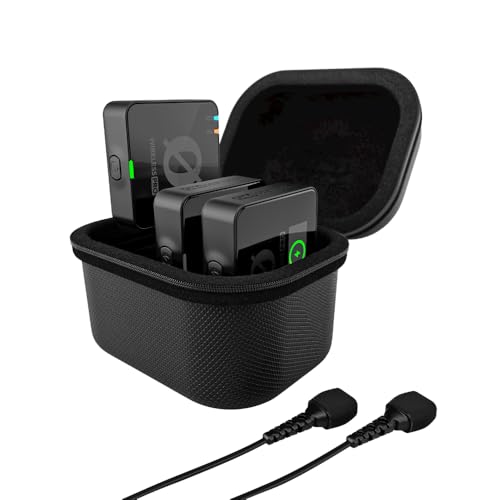
RØDE Wireless PRO (2 TX + 1 RX + Charging Case), 32-Bit Float, Timecode
Included for 'Best Lavalier Microphone (2026): 7 Wired & Wireless Picks' as a representative home product in this roundup; selection reflects the product set returned for this topic.
View on Amazon- Kit: 2 transmitters, 1 receiver, smart charging case, two Lavalier II mics, MagClip GO clips
- Wireless: Series IV 2.4 GHz with 128-bit encryption, up to 260 m line of sight
- Recording: 32-bit float on board, 32 GB per transmitter, over 40 hours
- Timecode: Internal timecode generator
- Battery: About 7 h per unit, case adds extra charges
- Connectors: Locking 3.5 mm TRS, headphone monitoring
Best for: filmmakers, documentary shooters and anyone syncing audio across multiple cameras. Skip if: you only record to a phone and never edit multi-camera footage.
The Wireless PRO is built for productions where audio sync and reliability matter more than size. Its standout feature is the internal timecode generator, which lets you sync audio and video automatically in compatible editors instead of lining up waveforms by hand. For anyone shooting interviews with two or three cameras, that saves real time in post.
The kit also includes two RØDE Lavalier II wired mics. You can clip the transmitters on as all-in-one mics, or hide them on a belt and run the discreet Lavalier II capsules under clothing for a cleaner on-camera look. Locking 3.5 mm connectors keep those cables from pulling out mid-take. Each transmitter records 32-bit float internally, and GainAssist helps keep levels balanced.
Compared with the DJI Mic 3, the Wireless PRO has a shorter rated range and relies on 2.4 GHz only, which reviewers note can limit it in congested environments. It wins on timecode workflow and on its ability to use hidden wired lavs.
Pros
- Built-in timecode for multi-camera sync
- Two Lavalier II mics included
- 32-bit float recording with long onboard capacity
- Locking connectors and headphone monitoring
Cons
- 2.4 GHz only
- Highest price tier on this list
3. DJI Mic Mini: Best Value Wireless Lavalier

DJI Mic Mini (2 TX + 1 RX + Charging Case), Ultralight, Detail-Rich Audio
Included for 'Best Lavalier Microphone (2026): 7 Wired & Wireless Picks' as a representative home product in this roundup; selection reflects the product set returned for this topic.
View on Amazon- Kit: 2 transmitters, 1 receiver, charging case
- Transmitter weight: 10 g without clip magnet
- Range: Up to 400 m in ideal conditions
- Audio: 48 kHz, 120 dB max SPL, automatic limiter
- Battery: Up to 11.5 h per transmitter, up to 48 h with case
- Noise cancelling: Basic and Strong modes
Best for: vloggers, short-form creators and streamers who want two wireless mics without paying pro prices. Skip if: you need backup recording or 32-bit float.
The Mic Mini is the easiest recommendation for anyone on a budget who still wants a polished wireless kit. At about 10 g, the transmitters are lighter than almost anything else here, so they sit comfortably on a T-shirt. The charging case pushes total battery life to as much as 48 hours, which covers a long weekend of filming without hunting for a USB port.
Two noise-cancelling modes cover different situations: Basic for quiet rooms with a fan or air conditioner, and Strong for street noise. A built-in limiter helps prevent clipping when someone suddenly raises their voice, and the receiver has a five-step gain knob. Transmitters can also pair directly with several DJI Osmo cameras without the receiver.
The compromises are clear. There is no internal recording, no 32-bit float and no external lav input, so if the wireless signal drops you lose that section of audio. For casual content that is an acceptable trade, and the price gap to the Mic 3 is significant.
Pros
- Extremely light transmitters
- Very long total battery life with case
- Two noise-cancelling levels and a limiter
Cons
- No onboard backup recording
- No external lav input
4. Hollyland Lark M2: Best for Camera and PC Setups

Hollyland Lark M2 Wireless Microphone for iPhone/Camera/Android/PC, 48kHz/24-bit High Fidelity Audio, 300m Range, Noise Cancelling, 40h Use, YouTube, Vlog, Streaming (2TX + 3RX + Charging Case)
Included for 'Best Lavalier Microphone (2026): 7 Wired & Wireless Picks' as a representative home product in this roundup; selection reflects the product set returned for this topic.
View on Amazon- Kit: 2 button-style transmitters, receiver, charging case
- Transmitter weight: About 9 g
- Audio: 48 kHz/24-bit, 70 dB SNR, 115 dB max SPL, omnidirectional
- Range: Up to 300 m line of sight, much less with obstacles
- Battery: About 10 h per transmitter with noise cancelling off, up to 40 h with case on the camera version
- Charging: Full case charge in about 2 h
Best for: creators who switch between a camera, a phone and a streaming PC. Skip if: you need recording on the transmitter.
The Lark M2 stands out for its button-sized transmitters, which look less like a gadget on camera than most clip-on wireless mics. At around 9 g they rival the DJI Mic Mini for comfort, and the long battery life on the camera version makes it practical for all-day events or long streams.
Hollyland offers several receiver versions, including models for USB-C phones and for cameras and PCs. The camera and PC version is the most flexible for a gaming or streaming desk because it can plug into a camera’s 3.5 mm input or work with a computer. Audio quality is rated at 48 kHz/24-bit, and environmental noise cancellation helps with fan and keyboard noise.
Like the Mic Mini, it skips onboard recording, so a dropped signal means lost audio. Pay attention to range claims too: Hollyland quotes a far shorter non-line-of-sight figure, so keep the receiver in view of the speaker for best results.
Pros
- Discreet button-style mics
- Long total battery life
- Flexible receiver versions for camera, phone and PC
Cons
- No internal recording
- Range drops sharply without line of sight
5. BOYA mini 2: Best Budget Wireless Lavalier

BOYA mini 2 Wireless Lavalier Microphone for iPhone 15/16/17 & Android
Included for 'Best Lavalier Microphone (2026): 7 Wired & Wireless Picks' as a representative home product in this roundup; selection reflects the product set returned for this topic.
View on Amazon- Kit: 2 transmitters, receiver, charging case
- Transmitter weight: About 5 g
- Audio: 48 kHz/24-bit, 80 dB SNR, 120 dB max SPL
- Noise reduction: AI noise cancellation, Strong up to -40 dB and Light up to -15 dB
- Range: Up to 100 m without obstacles
- Battery: About 6 h per mic with noise reduction off, up to 30 h with case
Best for: phone creators, students and first-time streamers. Skip if: you film long events far from the receiver.
The BOYA mini 2 shows how far budget wireless mics have come. Each transmitter weighs roughly 5 g, and the AI noise cancellation offers two strengths so you can choose between natural sound and aggressive cleanup. A safety track mode records a second channel at a lower level to protect against distortion, which is a useful feature at this price tier.
The BOYA Central app lets you adjust gain, EQ and low-cut settings. That control is helpful for streamers who want to cut keyboard thumps or desk rumble. Rated range is shorter than the DJI and Hollyland picks at about 100 m, but for a desk, a room or a short walk-and-talk that is ample.
Battery life per mic is the main weakness. With noise reduction on, the manual lists roughly 4.5 hours, so long recordings depend on the case. There is also no onboard recording.
Pros
- Entry-level price tier
- Very light mics
- AI noise reduction with two levels plus safety track
- App with EQ and low-cut
Cons
- Shortest per-mic battery life here
- Shorter range than premium kits
6. RØDE Lavalier II: Best Wired Lav for Wireless Transmitters
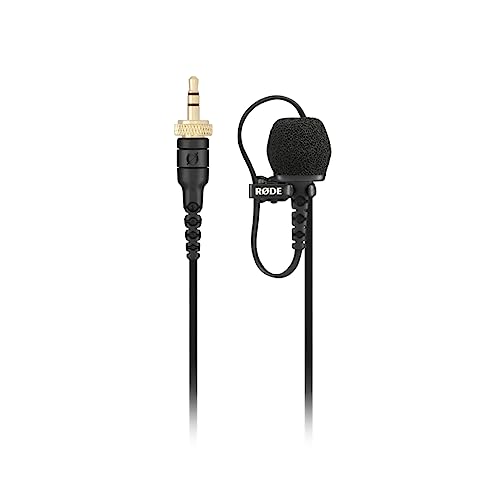
RØDE Lavalier II Ultra-Low-Profile Lavalier Microphone
Included for 'Best Lavalier Microphone (2026): 7 Wired & Wireless Picks' as a representative home product in this roundup; selection reflects the product set returned for this topic.
View on Amazon- Capsule: 6 mm omnidirectional condenser with flat, low-profile design
- Frequency range: 20 Hz to 20 kHz
- Noise: 28 dBA equivalent noise, 66 dB SNR
- Connector: Locking 3.5 mm TRS
- Power: Plug-in power from transmitter or recorder
- Included: Pop filter, furry windshield, clip, colored ID rings
Best for: anyone with a wireless transmitter or recorder that has a 3.5 mm input who wants a cleaner, hidden mic. Skip if: you want to plug straight into a phone or PC.
A wired lav still has a place in 2026. The Lavalier II’s flat capsule and flat cable sit flush against clothing and are easy to tape under a shirt, which looks far more professional on camera than a visible transmitter. Its very flat frequency response captures a natural voice, and the omnidirectional pattern is forgiving if placement shifts slightly.
It is designed to pair with transmitters such as the RØDE Wireless PRO and Wireless GO series, and the locking 3.5 mm connector keeps it secure on compatible inputs. It also works with field recorders that supply plug-in power. Because it has no electronics of its own, there is nothing to charge and very little to fail.
The catch is compatibility. It uses a TRS plug and plug-in power, so it is not a direct fit for most phones or for transmitters without a mic input, like the DJI Mic 3.
Pros
- Very discreet flat capsule and cable
- Natural, flat sound
- Locking connector and useful accessories
Cons
- Needs a compatible transmitter or recorder
- Not a direct plug-in for phones
7. Sennheiser XS Lav USB-C: Best Wired Lav for PC and Phone

Sennheiser Pro Audio Condenser Microphone, XS Lav USB-C (509261),Black
Included for 'Best Lavalier Microphone (2026): 7 Wired & Wireless Picks' as a representative home product in this roundup; selection reflects the product set returned for this topic.
View on Amazon- Capsule: Omnidirectional pre-polarized condenser
- Connector: USB-C, bus powered
- Cable: 2 m (6.6 ft)
- Frequency response: 70 Hz to 18 kHz
- Sample rates: Up to 48 kHz
- Compatibility: Windows, macOS, Linux, Android and iPadOS
Best for: streamers, remote workers and course creators recording at a desk. Skip if: you need to move freely around a room.
The XS Lav USB-C is the simplest route to better voice audio on a computer or phone. Plug it into a USB-C port and your system sees it as a standard microphone, with no transmitter, receiver or batteries to manage. For a gaming streamer who wants a cleaner voice than a headset mic without a big desk mic in shot, a clipped lav is a tidy solution.
The 2 m cable gives you room to sit back from a desk, and the omnidirectional capsule keeps your voice steady as you turn toward a second monitor. Its frequency range is narrower than studio lavs but well suited to speech. Older PCs with only USB-A ports will need a third-party adapter, and one reseller lists the model as end-of-life, so availability may vary.
Pros
- True plug and play on PC and mobile
- Nothing to charge
- Long 2 m cable and windscreen included
Cons
- Tethered to the device
- USB-A ports need an adapter
Also Consider
RØDE Wireless GO (Gen 3): Best Mid-Range 32-Bit Float Kit

RØDE Wireless GO (Gen 3) (2 TX + 1 RX + Charging Case), 32-Bit Float
Included for 'Best Lavalier Microphone (2026): 7 Wired & Wireless Picks' as a representative home product in this roundup; selection reflects the product set returned for this topic.
View on AmazonBest for creators who want onboard 32-bit float recording below Wireless PRO pricing. Each transmitter stores over 40 hours on 32 GB, range is up to 260 m and battery life is up to 7 hours. The trade-off is that it lacks the PRO’s timecode and included Lavalier II mics.
Shure MoveMic Two: Best Direct-to-Phone Option

Shure MoveMic Two - Pro Direct to Phone Wireless Lavalier Microphones for iPhone & Android, 2 Bluetooth Mini Mics, 24 Hours Charge, Quick Set Up, IPX4, Compact & Portable Clip Lavs (MV-Two-Z7)
Included for 'Best Lavalier Microphone (2026): 7 Wired & Wireless Picks' as a representative home product in this roundup; selection reflects the product set returned for this topic.
View on AmazonBest for mobile creators who want no receiver at all. The two mics connect to a phone over Bluetooth through Shure’s MOTIV apps, record at 24-bit/48 kHz, carry an IPX4 rating and run about 8 hours each, with the case adding two more charges. The trade-off is short range, about 30 m, and limited third-party app support without the optional receiver.
Saramonic Blink500 B2+: Best Battery Life Per Charge

Saramonic BLINK500B2+ Wireless Lavalier Microphone for iPhone/Camera/Android, Detail-Rich Audio, 40h Battery Life, Clip on Wireless Lapel Mic for Live Streaming Video Conference Recording
Included for 'Best Lavalier Microphone (2026): 7 Wired & Wireless Picks' as a representative home product in this roundup; selection reflects the product set returned for this topic.
View on AmazonBest for long shoots. Transmitters are rated for up to 20 hours and the receiver for 16, with roughly 40 hours total using the case. It offers two-stage noise reduction and a low-cut filter. The trade-off is a shorter 150 m range than DJI or RØDE.
How We Chose
We began with the lavalier microphones that appear most often across current 2026 buying guides from audio, video and creator publications, then removed models that are discontinued or superseded, such as kits replaced by a newer generation. For every candidate we checked the manufacturer’s spec sheet and cross-referenced at least one independent review. When sources conflicted, as with some battery figures, we used the maker’s own numbers and noted the conditions.
Our selection criteria were:
- Audio specs: sample rate, bit depth, noise floor and max SPL.
- Reliability features: onboard backup recording, 32-bit float and safety tracks.
- Wireless performance: rated range and frequency bands.
- Battery life: per transmitter and with the charging case.
- Compatibility: cameras, phones and PCs, plus external lav inputs.
- Price tier: at least one pick from budget through premium.
These picks are research-based. We did not run our own lab comparisons, and any performance notes are estimates based on published specs and reviews.
Buying Guide: How to Choose a Lavalier Microphone
Wired or wireless lavalier microphone?
Choose wired if you record at a desk, on a budget, or into a dedicated transmitter or recorder. Wired lavs have nothing to charge and no wireless dropouts. Choose a wireless lavalier microphone if you move around, film outdoors, record two people or need to keep cables out of shot. For most creators shooting video in 2026, a two-transmitter wireless kit is the most flexible option.
Range: how much do you really need?
Ratings such as 260 m or 400 m assume a clear line of sight. Real-world range is often a fraction of that once walls, bodies or crowds get in the way. For desk streaming and indoor interviews, 50 m is plenty. For outdoor sports, events or wide shots, prioritize kits with higher ratings and, ideally, dual-band links that move away from crowded 2.4 GHz.
32-bit float and onboard recording
Onboard recording saves a copy of the audio on the transmitter itself, which protects you against wireless dropouts. 32-bit float goes further by preserving such a wide dynamic range that clipped or very quiet audio can usually be recovered in editing. If you film unrepeatable moments like interviews, weddings or live events, treat onboard 32-bit float as a must-have. For casual vlogs, it is a nice extra.
Battery life
Look at the per-transmitter figure first, then the total with the case. Aim for at least 6 hours per mic for long streams and 8 hours or more for event days. Noise cancellation often reduces runtime, so check whether the maker’s figure assumes it is switched off.
Connectivity: camera, phone or PC
Make sure the receiver output matches your device: 3.5 mm TRS for cameras, TRRS or USB-C for phones, and USB for computers. Many kits include several cables or offer different receiver versions. If you want to hide a separate wired lav under clothing, confirm the transmitter has a 3.5 mm input, because some popular kits no longer include one.
Noise reduction and placement
Built-in noise cancellation helps in noisy rooms but can make voices sound processed at strong settings. Better placement often matters more: clip the mic roughly a hand’s width below your chin, centered on your chest, and use the included windscreen outdoors. Keep cables away from jewelry and fabric that rustles.
Wired vs Wireless Lavalier: Which Is Right for You?
For a seated streamer or remote worker, a wired USB-C lav like the Sennheiser XS Lav is hard to beat for simplicity: plug it in, select it as your input and talk. There are no batteries to manage and no chance of a wireless dropout. The trade-off is that you are tethered to your computer or phone.
For anyone who stands up on stream, films B-roll, records two people, or works outdoors, a wireless lavalier system is the better buy. Budget kits like the BOYA mini 2 and DJI Mic Mini deliver most of the convenience for an entry price, while the DJI Mic 3 and RØDE Wireless PRO add the backup recording that serious productions depend on.
There is also a hybrid path. Transmitters with a 3.5 mm input, such as the RØDE Wireless PRO and Wireless GO, can accept a wired lav like the Lavalier II. That gives you wireless freedom with the discreet look of a hidden wired mic, which is what many film crews use.
FAQ
What is the best lavalier microphone in 2026?
The DJI Mic 3 is the best lavalier microphone for most creators in 2026. It combines very small transmitters, dual-band wireless, 32-bit float backup recording and a charging case. Filmmakers who need timecode should look at the RØDE Wireless PRO, while budget buyers can start with the DJI Mic Mini or BOYA mini 2.
What is a lavalier microphone used for?
A lavalier microphone is used to record a single speaker’s voice clearly from close range while keeping the mic small and hands-free. Common uses include YouTube videos, interviews, podcasts on camera, live streams, presentations, theater and TV news. It reduces room echo compared with a camera-mounted mic.
Are wireless lavalier microphones good for streaming?
Yes, especially if you move around or stand during streams. A wireless lavalier keeps your voice level consistent and removes cables from your desk. Choose a kit whose receiver works with your PC, either over USB or through an audio interface, and check that latency is low enough for live use.
Can I use a lavalier mic with my phone?
Yes. Many wireless kits include a USB-C receiver or Lightning receiver for phones, and wired options like the Sennheiser XS Lav USB-C plug straight into USB-C phones. Some systems, like the Shure MoveMic Two, connect over Bluetooth directly to a phone app with no receiver at all.
Where should I clip a lavalier microphone?
Clip it about a hand’s width below your chin, centered on your chest, pointing upward. That spot keeps your voice clear without picking up too much breath. Avoid placing it under heavy fabric or next to jewelry, and use a windscreen outdoors.
What does 32-bit float recording mean?
32-bit float is a recording format with an extremely wide dynamic range. It means audio that would normally clip from a shout or sound too quiet from a whisper can usually be corrected in editing without distortion. On wireless lav kits, it is typically recorded on the transmitter as a backup.
Is a wired lav better quality than a wireless one?
Not necessarily. Modern wireless kits transmit 48 kHz/24-bit audio, which is more than enough for speech. A wired lav removes the risk of dropouts and needs no charging, while a premium wired capsule like the RØDE Lavalier II can sound more natural than the built-in mic on some budget transmitters.
Which Lavalier Microphone Should You Buy?
- You want one kit for everything: DJI Mic 3.
- You shoot multi-camera or need timecode: RØDE Wireless PRO.
- You want the best value wireless kit: DJI Mic Mini.
- You switch between camera, phone and PC: Hollyland Lark M2.
- Your budget is tight: BOYA mini 2.
- You already own a transmitter with a mic input: RØDE Lavalier II.
- You stream or record seated at a desk: Sennheiser XS Lav USB-C.
- You want 32-bit float without the premium price: RØDE Wireless GO (Gen 3).
Good placement and a windscreen will improve any of these more than a spec upgrade, so take a minute to set up before you hit record.
Sources consulted: manufacturer spec pages from DJI, RØDE, Hollyland, BOYA, Sennheiser, Shure and Saramonic, plus independent coverage from outlets such as Newsshooter, Digital Camera World, Videomaker, SoundGuys and DPReview.
Last updated: October 10, 2026