Key takeaways
- The best Android TV boxes for streaming in 2026 are the Google TV Streamer (4K) for most households, the NVIDIA Shield TV Pro for demanding users and cloud gaming, and the Homatics Box R 4K Plus when you want more…
The best Android TV boxes for streaming in 2026 are the Google TV Streamer (4K) for most households, the NVIDIA Shield TV Pro for demanding users and cloud gaming, and the Homatics Box R 4K Plus when you want more memory, storage, and wired-network headroom.
Best Android TV boxes at a glance
| Model | Best for | Video and codec strengths | Memory and storage | Typical market range |
|---|---|---|---|---|
| Google TV Streamer (4K) | Most streaming households | 4K at 60Hz, Dolby Vision, HDR10+, HDR10, HLG, AV1, HEVC | 4GB RAM, 32GB storage | Usually $90–$120 |
| NVIDIA Shield TV Pro | Cloud gaming, Plex, upscaling | 4K at 60Hz, Dolby Vision, HDR10, HEVC, strong AI upscaling | 3GB RAM, 16GB storage | Usually $180–$230 |
| Homatics Box R 4K Plus | Power users and local media | 4K at 60Hz, Dolby Vision, HDR10+, AV1, HEVC | 4GB RAM, 32GB storage | Usually $150–$200 |
| Xiaomi TV Box S (2nd Gen) | Low-cost 4K streaming | 4K at 60Hz, Dolby Vision, HDR10+, AV1, HEVC | 2GB RAM, 8GB storage | Usually $50–$80 |
1. Google TV Streamer (4K): the best choice for most people
The Google TV Streamer (4K) is the easiest recommendation when your priorities are mainstream streaming apps, a responsive interface, and enough storage for several years of updates. Its 4GB of RAM and 32GB of storage give it a useful advantage over inexpensive 2GB/8GB boxes: apps are less likely to reload, and you have more room for games and downloaded media apps.

Xiaomi TV Box S 3rd Gen - 4K UHD, Google TV, 32GB Memory, Dolby Vision & Atmos, WiFi 6, HDMI 2.1, Fast Streaming, Compact and Powerful
Included for 'Best Android TV Boxes for Streaming' because the listing specifies 4K UHD and Google TV, details this guide uses to compare options.
View on Amazon
Xiaomi Android Google TV Box S 3rd Gen, 4K UHD TV Box Dolby Vision Atmos & DTS:X, 2GB + 32GB Storage WiFi 6 HDMI 2.1 360° Bluetooth Remote Voice Control for Television Internet Smartphones Streaming
Included for 'Best Android TV Boxes for Streaming' because the listing specifies 4K UHD TV Box Dolby Vision Atmos & DTS:X, details this guide uses to compare options.
View on Amazon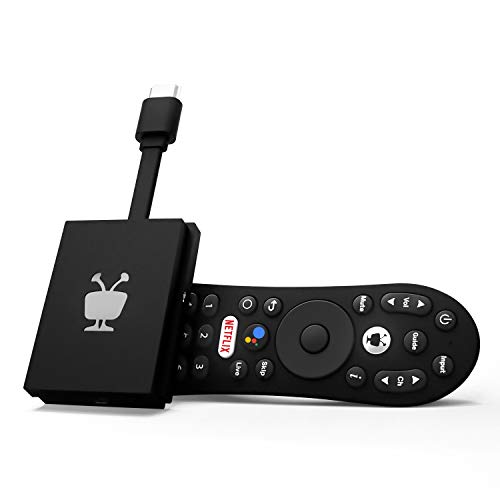
TiVo Stream 4K – Every Streaming App and Live TV on One Screen – 4K UHD, Dolby Vision HDR and Dolby Atmos Sound – Powered by Android TV – Plug-In Smart TV, One size
Included for 'Best Android TV Boxes for Streaming' because the listing specifies Every Streaming App and Live TV on One Screen and 4K UHD, details this guide uses to compare options.
View on Amazon
ONN Android TV 4K UHD Streaming Device with Voice Remote Control Google Assistant & High Speed HDMI Cable (100026240) Black
Included for 'Best Android TV Boxes for Streaming' as a relevant option in this category; details come from the product listing.
View on AmazonIt supports 4K output at up to 60Hz and common modern formats including Dolby Vision, HDR10+, HDR10, HLG, HEVC, and AV1. AV1 matters because newer YouTube and some streaming services can use it to deliver comparable quality at a lower bitrate. Your television, subscription, and the specific stream still determine whether HDR or AV1 is actually used.
The remote is compact and includes dedicated streaming-service buttons, voice search, and a programmable button. It is particularly convenient for controlling a compatible television and soundbar through HDMI-CEC. The built-in Ethernet connection is also valuable for cloud gaming because it avoids wireless interference.
Where it falls short
This is not an enthusiast gaming box. Its processor is fast enough for streaming and casual Android games, but it does not match the Shield TV Pro for emulation, AI upscaling, or demanding cloud-gaming interfaces. It also tops out at 4K/60 rather than targeting 120Hz gaming displays.
2. NVIDIA Shield TV Pro: the best Android TV box for cloud gaming and local media
The NVIDIA Shield TV Pro remains compelling because its Tegra X1+ processor, 3GB of RAM, and mature software handle tasks that many newer budget boxes neglect. It supports GeForce NOW, Xbox Cloud Gaming through a supported browser or app route, Steam Link, Moonlight, Plex, Kodi, and a wide range of controller peripherals.
Its most distinctive feature is AI upscaling. When enabled at a moderate setting, it can make a 1080p source look cleaner on a 4K television without pretending to create genuine 4K detail. This is useful for older game streams, broadcast content, and lower-resolution videos.
The Shield TV Pro supports Dolby Vision and HDR10, but it does not offer AV1 hardware decoding. That makes it less future-oriented for services that increasingly rely on AV1, although most major streaming content remains available in compatible formats. Its 16GB storage is also modest; a USB 3 storage device can expand capacity for apps and media.
Why it wins for cloud gaming
Cloud gaming depends more on network consistency and input latency than on raw video decoding. The Shield has gigabit Ethernet, broad Bluetooth and USB controller support, and enough processing power to keep its interface responsive while handling streaming software. It is a strong fit for a user who wants one box for Netflix-style streaming, PC game streaming, emulation, and a wired controller setup.
It is expensive for a device whose main job is playing 4K video. Choose it for its extra capabilities, not simply because it is older and well known.
3. Homatics Box R 4K Plus: the high-spec alternative
The Homatics Box R 4K Plus is aimed at buyers who want more memory and connectivity than low-cost Android TV hardware usually provides. Its 4GB RAM, 32GB storage, gigabit Ethernet, USB ports, and support for AV1, HEVC, Dolby Vision, and HDR10+ make it well suited to large local-media libraries and demanding applications.
It is especially attractive when your media collection includes high-bitrate files on a network-attached storage device. Wired Ethernet gives it more headroom than a typical 2.4GHz Wi-Fi connection, while the extra storage reduces the need for constant app management.
There is a trade-off: app certification and firmware support can vary more by region and retailer than they do with Google-branded hardware. Before buying, confirm that the exact regional version is certified for the services you use, particularly premium streaming apps that enforce HDCP, DRM, and resolution restrictions.
4. Xiaomi TV Box S (2nd Gen): the budget pick
The Xiaomi TV Box S (2nd Gen) offers a low-cost route to 4K streaming with Dolby Vision, HDR10+, AV1, and HEVC support. It is a sensible choice for a bedroom television, a second room, or a household that mainly uses a few mainstream apps.
Its 2GB of RAM and 8GB of storage are the limiting factors. The box can stream 4K comfortably when the app and network cooperate, but switching between many apps is slower, and available storage can disappear quickly after installing games and offline content. It is better suited to streaming than to cloud gaming.
Check the regional software version carefully. Xiaomi sells products with similar names in different markets, and app certification, tuner features, power adapters, and interface versions may differ.
How to choose by situation
| Your situation | Best fit | Reason |
|---|---|---|
| 4K Netflix, YouTube, Disney+, and simple TV control | Google TV Streamer (4K) | Good memory, current codec support, and simple remote integration |
| GeForce NOW, Steam Link, Moonlight, or frequent controller use | NVIDIA Shield TV Pro | Strong software support, USB ports, Ethernet, and responsive performance |
| Large Plex or Kodi library with wired networking | Homatics Box R 4K Plus | 32GB storage, 4GB RAM, gigabit Ethernet, and broad local-media codec support |
| Secondary television and minimal app use | Xiaomi TV Box S (2nd Gen) | Low purchase cost with 4K, HDR, and AV1 support |
| 120Hz television or 4K/120 gaming | None of these as a guaranteed solution | These models are primarily 4K/60 streaming boxes; use a device specifically advertising HDMI 2.1 and 4K/120 output |
Streaming resolution is only half the story
A box labelled “4K” does not guarantee a 4K stream. The service subscription, title, television, HDMI cable, HDCP handshake, and network can all reduce quality. For 4K streaming, allow at least 25 Mbps of stable internet bandwidth per active stream. A safer household calculation is:
Required capacity = (25 Mbps × number of simultaneous 4K streams) + 20 Mbps overhead.
For two 4K streams, that is 25 × 2 + 20 = 70 Mbps. This does not mean a 70 Mbps connection will always perform well: a busy Wi-Fi channel, packet loss, or latency spikes can still cause buffering. For cloud gaming, prioritize consistency over peak download speed. A wired connection or strong 5GHz/6GHz Wi-Fi is normally more important than paying for hundreds of additional megabits.
Cloud-gaming setup that reduces delay
-
Use Ethernet first. Connect the box directly to the router where possible. If Wi-Fi is necessary, use 5GHz or 6GHz with the router in the same room or nearby.
-
Choose 1080p/60 before 4K. A 1080p stream at 60 frames per second usually needs less bandwidth and encoding time than 4K. Increase quality only after checking that motion remains stable.
-
Use a wired controller or Bluetooth controller with a clear path. Keep the controller close to the box and avoid placing it behind the television or inside a metal cabinet.
-
Disable unnecessary background activity. Pause large downloads, cloud backups, and automatic game updates during play. They can create queueing delay even when a speed test looks fast.
-
Turn off television motion smoothing. “Smooth,” “soap opera,” and frame-interpolation modes add processing delay. Use Game mode when available, even if the game is rendered remotely.
Remote controls and app compatibility
A good remote should support voice search, television power and volume control, and HDMI-CEC. Google’s remote is the simplest general-purpose option. The Shield remote adds backlit buttons and a more gaming-oriented ecosystem, although its triangular design is not universally comfortable. Budget remotes work adequately for navigation but often lack backlighting and precise volume integration.
For premium streaming, look for official Android TV or Google TV certification rather than merely seeing “Android” on the box. Certification affects DRM level, HDCP support, app availability, and maximum resolution. Sideloading an app can make it launch, but it may not restore 4K playback or reliable remote navigation.
Final verdict
Choose the Google TV Streamer (4K) for the best balance of current codecs, memory, storage, remote control, and mainstream app compatibility. Choose the NVIDIA Shield TV Pro if cloud gaming, Plex, upscaling, USB accessories, or emulation justify its higher cost. Choose the Homatics Box R 4K Plus for a more expandable, wired-media setup, and the Xiaomi TV Box S (2nd Gen) when the goal is affordable 4K streaming on a secondary screen.