Key takeaways
- Start at 1/2000 second to reduce wing and camera movement.
- Use the widest practical aperture, often f/6.3 to f/9 on these zooms.
- Begin with Auto ISO and set a maximum ISO appropriate for your camera, such as 6400 or 12800.
- Use continuous AF and a subject-detection mode, but switch to a small tracking area if the background is busy.
The best 200 600mm lenses for most wildlife photographers are the Sony FE 200-600mm F5.6-6.3 G OSS, Nikon NIKKOR Z 180-600mm f/5.6-6.3 VR, and Canon RF 200-800mm F6.3-9 IS USM, with the right choice determined mainly by your camera mount, subject distance, light, and tolerance for weight.
Best 200-600mm lenses compared
| Lens | Mount compatibility | Maximum reach | Weight | Stabilization | Best suited to |
|---|---|---|---|---|---|
| Sony FE 200-600mm F5.6-6.3 G OSS | Sony E | 600mm | Approximately 2,115g | Optical SteadyShot, up to about 5 stops | Birds, mammals, field sports, Sony full-frame bodies |
| NIKKOR Z 180-600mm f/5.6-6.3 VR | Nikon Z | 600mm | Approximately 1,955g | VR, up to about 5.5 stops | Wildlife and sports with Nikon Z cameras |
| Canon RF 200-800mm F6.3-9 IS USM | Canon RF | 800mm | Approximately 2,050g | Optical IS, up to about 5.5 stops | Maximum reach in good daylight |
| Sigma 150-600mm F5-6.3 DG DN OS Sports | Sony E, L-Mount | 600mm | Approximately 2,100g | Optical stabilization, approximately 4 stops | Rugged use and demanding outdoor conditions |
| Tamron 150-500mm F/5-6.7 Di III VC VXD | Sony E, Fujifilm X | 500mm | Approximately 1,725g | VC image stabilization | Travel, hiking, and handheld shooting |
| Canon RF 100-500mm F4.5-7.1 L IS USM | Canon RF | 500mm | Approximately 1,370g | Optical IS, up to about 5 stops | Portable wildlife kits and mixed subjects |
1. Sony FE 200-600mm F5.6-6.3 G OSS: the balanced Sony choice
Sony’s 200-600mm is one of the most versatile long zooms for wildlife because its internal zooming design keeps the lens barrel from extending as you change focal length. That helps balance, reduces the chance of drawing in dust through a moving barrel, and makes the lens easier to use from a monopod or tripod.
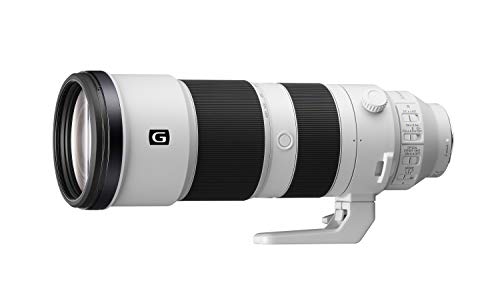
Sony FE 200-600mm f/5.6-6.3 G OSS Super Telephoto Zoom Lens
Included for 'Best 200-600mm Lenses for Wildlife and Sports' as a relevant option in this category; details come from the product listing.
View on AmazonSony FE 200-600mm F5.6-6.3 G OSS Super Telephoto Zoom Lens (SEL200600G) (Renewed)
Included for 'Best 200-600mm Lenses for Wildlife and Sports' as a relevant option in this category; details come from the product listing.
View on AmazonSharpness is strong across the zoom range, particularly in the center of the frame, and autofocus works well with modern Sony bodies that offer animal, bird, or subject-recognition AF. The 600mm setting gives enough reach for small birds, while 200mm is useful when a deer, athlete, or large bird moves closer.
The main compromise is its f/6.3 maximum aperture at 600mm. In bright daylight this is manageable, but overcast forests, dawn, dusk, and indoor sports may require ISO 3200 or higher. Its approximately 2.1kg weight is reasonable for this class but still demanding during a full day of handheld shooting.
2. NIKKOR Z 180-600mm: the strongest all-round Nikon option
The NIKKOR Z 180-600mm f/5.6-6.3 VR is a natural choice for Nikon Z users who want long reach without the price and weight of a professional f/4 prime. Its broad zoom range starts at 180mm, giving slightly more room than a 200mm lens when a subject approaches unexpectedly.
Autofocus is quiet and responsive, and the lens pairs particularly well with Nikon Z cameras that provide bird detection and 3D subject tracking. The internal focusing design and relatively moderate weight make it practical for panning with birds in flight or sideline sports.
At 600mm, the lens is sharp enough for detailed feathers and distant players, though atmospheric distortion can become a bigger limitation than the optics. Heat shimmer over a field or haze across a lake may soften a distant subject even when focus is correct.
Its vibration reduction is useful for static subjects, but stabilization cannot freeze a moving animal or athlete. For action, use a sufficiently fast shutter speed first and treat VR as help for camera shake rather than subject motion.
3. Canon RF 200-800mm: maximum reach without a teleconverter
The Canon RF 200-800mm F6.3-9 IS USM offers the longest reach in this group. At 800mm, it can frame a small bird at a distance or isolate a player on the far side of a field without adding a teleconverter. It is also compatible with Canon’s full-frame and APS-C RF-mount mirrorless cameras.
The trade-off is its slow aperture. At 800mm the lens is f/9, so it is best in bright daylight. Compared with an f/6.3 lens, f/9 allows roughly half as much light to reach the sensor. That can mean raising ISO by about one stop, reducing shutter speed, or accepting less background separation.
Autofocus remains useful for wildlife and outdoor sports, particularly with newer Canon bodies that provide animal and people tracking. However, the lens is less attractive for night games, indoor arenas, or heavily shaded woodland. If those are your main subjects, a shorter but faster lens may produce cleaner images and more reliable AF.
4. Sigma 150-600mm Sports: the rugged option
The Sigma 150-600mm F5-6.3 DG DN OS Sports is available for Sony E and L-Mount cameras. It is designed for demanding outdoor use, with robust construction and sealing that suits wet sidelines, coastal birding, and dusty wildlife locations.
It provides a useful 150mm starting point for nearby subjects and reaches 600mm for distant action. The optical stabilization system helps with handheld composition, while customizable controls can make it easier to switch between focus modes and stabilization behavior.
At approximately 2.1kg, it is not the lightest option. Choose it when durability, control layout, and a solid build matter more than minimizing backpack weight. For long hikes, the lighter Tamron 150-500mm or Canon RF 100-500mm may be more comfortable.
5. Tamron 150-500mm: best for carrying all day
The Tamron 150-500mm F/5-6.7 Di III VC VXD is a practical compromise for Sony E and Fujifilm X users. Its approximately 1.7kg weight is noticeably easier to carry than many 600mm zooms, and the compact design suits travel, hiking, and opportunistic wildlife photography.
Its 500mm maximum is enough for large mammals, birds at moderate distances, and most outdoor sports. It will not frame a distant small bird as tightly as a 600mm or 800mm lens, but the lighter kit may help you stay ready and shoot more consistently.
On a Fujifilm X camera, the 1.5x crop factor gives a field of view equivalent to approximately 225-750mm in full-frame terms. This does not increase optical detail, but it can make a distant subject occupy more of the image area.
6. Canon RF 100-500mm: the portable Canon solution
The Canon RF 100-500mm F4.5-7.1 L IS USM is the easiest lens here to carry for long periods. Its 100mm wide end is valuable when an animal comes close, and its 500mm reach remains useful for larger wildlife and field sports.
It is sharper and faster at the short end than many super-telephoto zooms, and its autofocus is well matched to Canon RF cameras. The limitation is reach: small birds at long distances will appear smaller than they would with an 800mm lens, and the lens’s maximum aperture becomes f/7.1 at the long end.
It is also important to check teleconverter compatibility before buying. Canon’s RF 1.4x and 2x extenders are designed for selected RF lenses, and the RF 100-500mm has specific restrictions on the focal-length range when an extender is attached.
Which lens fits your situation?
| Your situation | Best direction | Why |
|---|---|---|
| Sony full-frame camera, general wildlife | Sony 200-600mm | Strong reach, internal zoom, capable AF, and balanced handling |
| Nikon Z camera, wildlife or outdoor sports | NIKKOR Z 180-600mm | Excellent native compatibility and a useful 180mm starting point |
| Canon RF camera, bright daylight, distant subjects | Canon RF 200-800mm | Maximum reach without adding a teleconverter |
| Long hikes or frequent air travel | Tamron 150-500mm or Canon RF 100-500mm | Lower weight and easier handheld use |
| Rain, dust, and demanding field conditions | Sigma 150-600mm Sports | Rugged construction and extensive external controls |
| Indoor sports or evening action | A faster lens, even if shorter | f/6.3 to f/9 can force high ISO or insufficient shutter speed |
Reach versus sharpness: a useful field-of-view calculation
A 600mm lens gives 50% more linear magnification than a 400mm lens from the same position because 600 divided by 400 equals 1.5. If a bird occupies 1,000 pixels across the frame at 400mm, it may occupy approximately 1,500 pixels at 600mm, assuming the same camera position and subject distance.
That extra reach can matter more than a small difference in laboratory sharpness. However, the calculation assumes the subject stays still and the air is clear. If wind movement, poor focus, or heat shimmer reduces fine detail, a theoretically longer lens may not produce a visibly better photograph.
Recommended settings for wildlife and sports
Birds in flight
- Start at 1/2000 second to reduce wing and camera movement.
- Use the widest practical aperture, often f/6.3 to f/9 on these zooms.
- Begin with Auto ISO and set a maximum ISO appropriate for your camera, such as 6400 or 12800.
- Use continuous AF and a subject-detection mode, but switch to a small tracking area if the background is busy.
Large mammals
- Use about 1/1000 second for walking animals and 1/1600 second for running subjects.
- Use single-point or expanded-area AF when branches or grass may confuse automatic subject detection.
- At 600mm or 800mm, support the lens with a monopod when standing for long periods.
Field sports
- Set 1/1000 to 1/2000 second for football, soccer, hockey, or fast racquet sports.
- Choose a zone or tracking AF area that covers the athlete rather than allowing the camera to select the entire frame.
- Turn stabilization to a panning mode when available and moving horizontally with the subject.
Mount compatibility matters more than small specification differences
These lenses are not interchangeable across mounts. Sony E lenses fit Sony E cameras; Nikon Z lenses fit Nikon Z cameras; Canon RF lenses fit Canon RF cameras; and Sigma’s DG DN Sports version is offered for Sony E and L-Mount. Adapters may allow some DSLR lenses to work on mirrorless bodies, but native lenses usually provide the most predictable autofocus, stabilization communication, and subject-recognition performance.
Before purchasing, confirm whether your camera is full-frame or APS-C, whether the lens supports the body’s animal-detection AF, and whether a tripod foot or collar is included. Also check the total carrying weight: a 2kg lens may become a 3kg-plus kit once the camera, monopod, spare battery, and protective accessories are added.
Final buying advice
Choose the Sony 200-600mm or Nikon 180-600mm for the best balance of reach and everyday usability on their native systems. Choose the Canon RF 200-800mm when maximum daylight reach is more important than aperture and weight. Choose the Tamron or Canon RF 100-500mm when portability will determine how often you carry the lens. Choose Sigma’s 150-600mm Sports when rugged construction and field controls justify its heavier build.
For most buyers, the best 200 600mm lenses are not the ones with the biggest number on the barrel. They are the lenses that provide enough reach for the subject while still allowing a fast shutter speed, reliable autofocus, and a manageable setup for the hours you actually plan to spend shooting.